Are You Looking For A Solution To Your Ingrown Toenail In Bishopbriggs, Glasgow ?
Get fast, professional ingrown toenail care to eliminate pain, treat infection, and help prevent future nail problems.
Service Details
What is Nail Surgery?
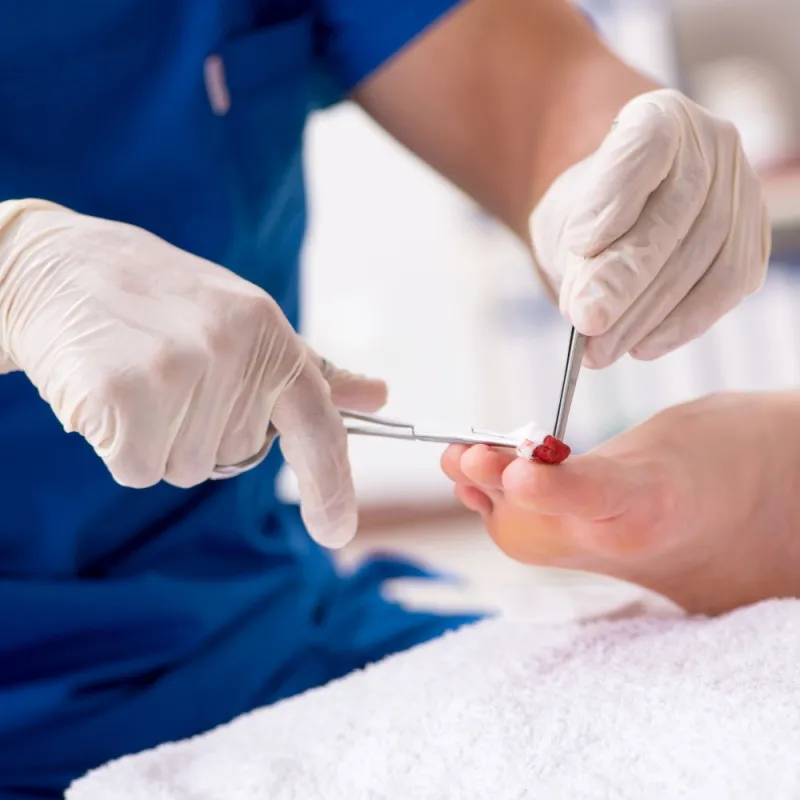
Nail surgery is a minor surgical procedure performed under local anesthetic for the permanent cure of ingrown and problem nails.
It is generally performed when conservative nail care treatments only provide temporary relief or where the nail or nails have become damaged.
WHY CHOOSE US?
HCPC REGISTERED PODIATRISTS

PRIVATE CONSULTATION

PROFESSIONAL SERVICE

COMPREHENSIVE ASSESSMENT

EVIDENCE BASED SURGERY

STERILE INSTRUMENTS

FULLY INSURED
Service Details
What is Nail Surgery?
Nail surgery is a minor surgical procedure performed under local anesthetic for the permanent cure of ingrown and problem nails.
It is generally performed when conservative nail care treatments only provide temporary relief or where the nail or nails have become damaged.
WHY CHOOSE US?
HCPC REGISTERED PODIATRISTS
PRIVATE CONSULTATION
PROFESSIONAL SERVICE
COMPREHENSIVE ASSESSMENT
EVIDENCE BASED SURGERY
STERILE INSTRUMENTS
FULLY INSURED
Does Any of This Sound Familiar?
Do you find yourself having to go back repeatedly to have your ingrown toenail treated?
Has your doctor prescribed too many antibiotics, yet you are still in pain?
Have you spent excessive time and money trying various home remedies?
Have you been informed that toenail surgery is the next necessary step?
Have you started to worry that you will never get rid of your ingrown toenail and may never be able to resume the activities you love?
If you answered YES to any of the above, you may have found the ANSWER to your orthotics questions at The Springfield Clinic , Bishopbriggs, Glasgow
What is an Ingrown Toenail?
At the The Springfield Clinic , we understand the discomfort and pain that ingrown toenails can cause, and we want to provide our readers with valuable information on how to treat this issue.
An ingrown toenail is a painful condition that occurs when the edge of the toenail grows into the surrounding skin. While it commonly affects the big toe, it can develop in any toe on the foot. The symptoms of an ingrown toenail include pain, redness, and swelling in the affected area.
One of the main causes of ingrown toenails is improper nail trimming. Cutting the nails too short or rounding the edges can encourage the nail to grow into the skin instead of straight out. This can lead to the development of an ingrown toenail.
Additionally, injuries to the toe, such as stubbing it or dropping something heavy on it, can also contribute to the condition. In some cases, individuals may have an inherited nail shape that increases their susceptibility to ingrown toenails.
Treatment Options for Ingrown Toenails
Effective treatment for ingrown toenails requires careful consideration by a qualified podiatrist to achieve optimal outcomes. The appropriate treatment may vary depending on the stage of the diagnosed ingrown toenail, ranging from conservative techniques to surgical interventions.
Conservative methods are typically recommended for mild to moderate cases (stages 1 and 2) of ingrown toenails, while more severe cases (stage 3) may require surgical intervention. Additional internal factors, such as allergies, pregnancy, bleeding disorders, or significant medical histories, can also influence treatment selection. Our podiatrists possess the knowledge and expertise to evaluate and treat various conditions, working closely with you to ensure the provision of the finest care.
Numerous conservative measures are available to treat ingrown toenails, proving highly effective for patients diagnosed in stages 1 or 2.
Footwear advice
Proper footwear selection can ensure adequate room in the toe box, preventing the nails from growing into the surrounding skin.
Podiatry nail resection
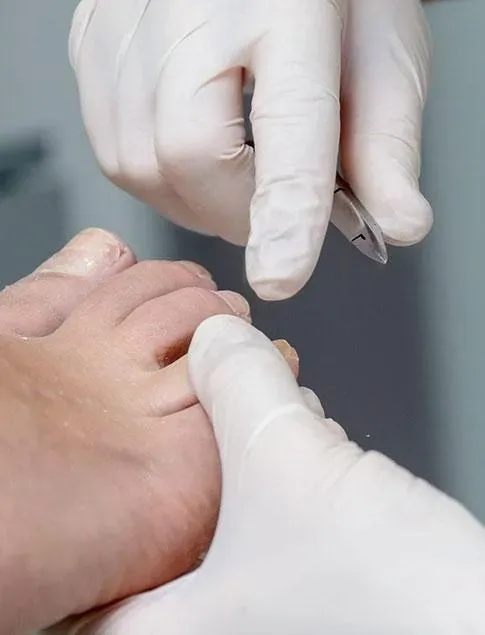
This involves a podiatrist carefully cutting out the nail spicule with or without local anesthesia. It is often the first-line treatment for mild to moderate cases of ingrown toenails.
Correct nail trimming and education
This includes avoiding curved cutting and leaving sharp edges, which can contribute to ingrown toenails.
For more severe cases of ingrown toenails (stage 3), surgical procedures may be necessary. These procedures are performed under local anesthesia, which is administered by a podiatrist.
FAQS
Frequently Asked Questions About Ingrown Toenails
What is an ingrown toenail?
An ingrown toenail occurs when the edge of the toenail grows into the skin, causing pain, redness, and swelling.

What are the symptoms of an ingrown toenail?
Symptoms of an ingrown toenail can include pain, redness, swelling, and, in more severe cases, pus and infection.
Who is affected by ingrown toenails?
Ingrown toenails can affect anyone, but adolescents between the ages of 12-30 are particularly susceptible, with males being affected twice as often as females. Those who are immunocompromised, have circulation issues, or are diabetic are particularly vulnerable to complications.
What are the treatment options for ingrown toenails?
Treatment options for ingrown toenails vary depending on the severity of the condition. Conservative measures, such as soaking the affected toe, proper footwear selection, podiatry nail resection, and nail trimming education, are often recommended for mild to moderate cases. Surgical procedures, such as partial nail avulsion or total nail avulsion, may be necessary for more severe cases.
What is ingrown toenail surgery?
Ingrown toenail surgery is a relatively simple procedure that involves removing the ingrown portion of the toenail under local anesthesia. In some cases, a small portion of the surrounding tissue may also be removed to prevent the nail from growing back into the skin. The procedure usually takes less than an hour, and patients can return to normal activities within a few days.
4 Reasons To Choose The Springfield Clinic

Specialised Expertise
Our clinic offers specialised care from highly-trained podiatrist in various fields like sports rehab and chronic pain management.

Comprehensive Approach
We provide holistic treatment plans combining manual therapy, exercises, and cutting-edge technology for a well-rounded approach.

Cutting-Edge Facilities
Equipped with state-of-the-art facilities and advanced equipment to support patients' recovery.

Proven Track Record
Our clinic's reputation is built on successful patient outcomes and positive feedback, fostering a supportive environment for rehabilitation.
REVIEWS
Rated the best podiatrists in Southam — here’s what our patients are saying!
With years of training and experience, we combine our expertise with state-of-the-art equipment to provide the best possible care for all foot and lower limb conditions.
Our highly skilled podiatrists — previously based in London — now proudly serve the Southam community. See why our patients consider us the leading podiatrists in the area by reading their reviews.
CONTACT US
We Are Conveniently Located At
SPB Podiatry, The Springfield Clinic, Springfield House, 6 Emerson Rd, Bishopbriggs, Glasgow G64 1QE
Ground Floor Clinic
Disabled Access
Car Parking
Local Transport Links

Disclaimer
The contents of this website including any details given about conditions and treatments are for information purposes only and must not be used as a guide for self-diagnosis or self-treatment. Health First and Feet First (Southam) Limited do not accept any responsibility if the information held on these pages is used in any other way except for personal enquiry.

Contact Us
Feet First (Southam) Limited
Daventry Street
Southam
Warwickshire
CV47 1PH
Phone: 01926 811272
Email: [email protected]
Company Number: 04642090
Quick Links
Buy Foot Care Products
© 2022 Health First Foot and Gait Clinic | Warwickshire, CV47 1PH
Powered By